
The lens vaults the cornea
The lens is designed to clear the cornea rather than rub on its irregular or sensitive surface.
SCLERAL LENS CARE · KOLKATA
Specialist scleral lens fitting for keratoconus, corneal scars, post-surgical eyes and selected complex ocular-surface conditions.
Scleral lenses support vision and, in selected cases, the ocular surface. They do not cure corneal disease. Suitability requires an individual examination.
WHAT IS A SCLERAL LENS?
A scleral lens is a large, custom-made rigid gas-permeable contact lens. Unlike a small corneal lens, it passes over the cornea and lands on the white part of the eye, called the sclera.
Before insertion, the bowl of the lens is filled with preservative-free saline. This creates a fluid reservoir between the lens and the cornea.
The rigid front surface provides a new, regular optical surface. That is why a scleral lens may improve vision when an irregular cornea cannot be fully corrected with glasses or standard soft lenses.
HOW DOES IT WORK?
The lens is designed to clear the cornea rather than rub on its irregular or sensitive surface.
The fluid reservoir masks some surface irregularity and can support selected dry or damaged corneas during wear.
The stable rigid lens surface helps direct light more evenly towards the retina.
 Conceptual educational illustration
CORNEAL CONDITIONS WE ASSESS
The condition name alone does not decide suitability. Corneal health, shape, sensitivity, treatment history and your visual goals all guide the recommendation.
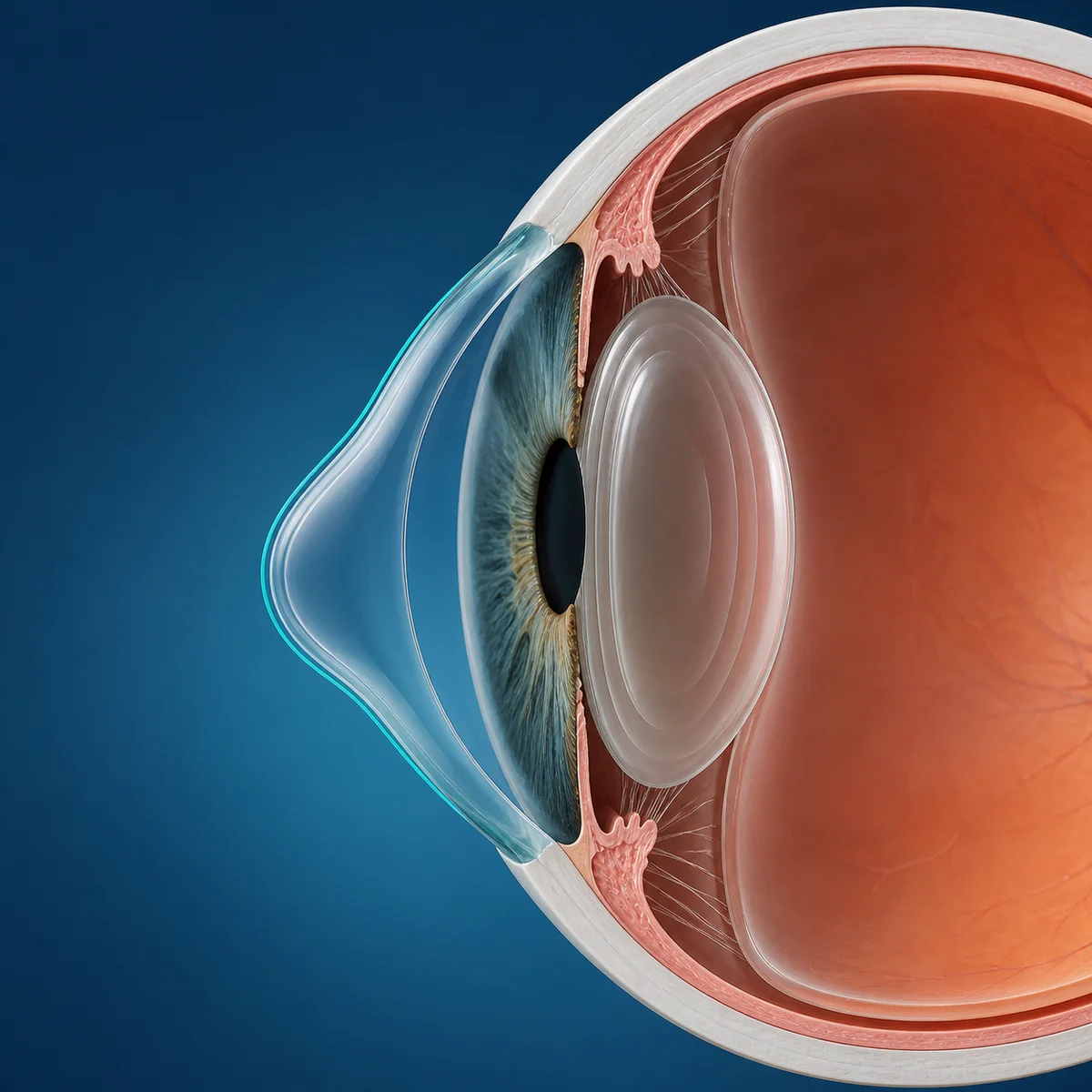
When the cornea becomes thin or steep, its irregular shape can scatter light. A scleral lens may create a smoother optical surface for clearer vision.

A scar can leave the corneal surface uneven. A specialist lens may improve how light is focused when glasses cannot correct the irregularity fully.
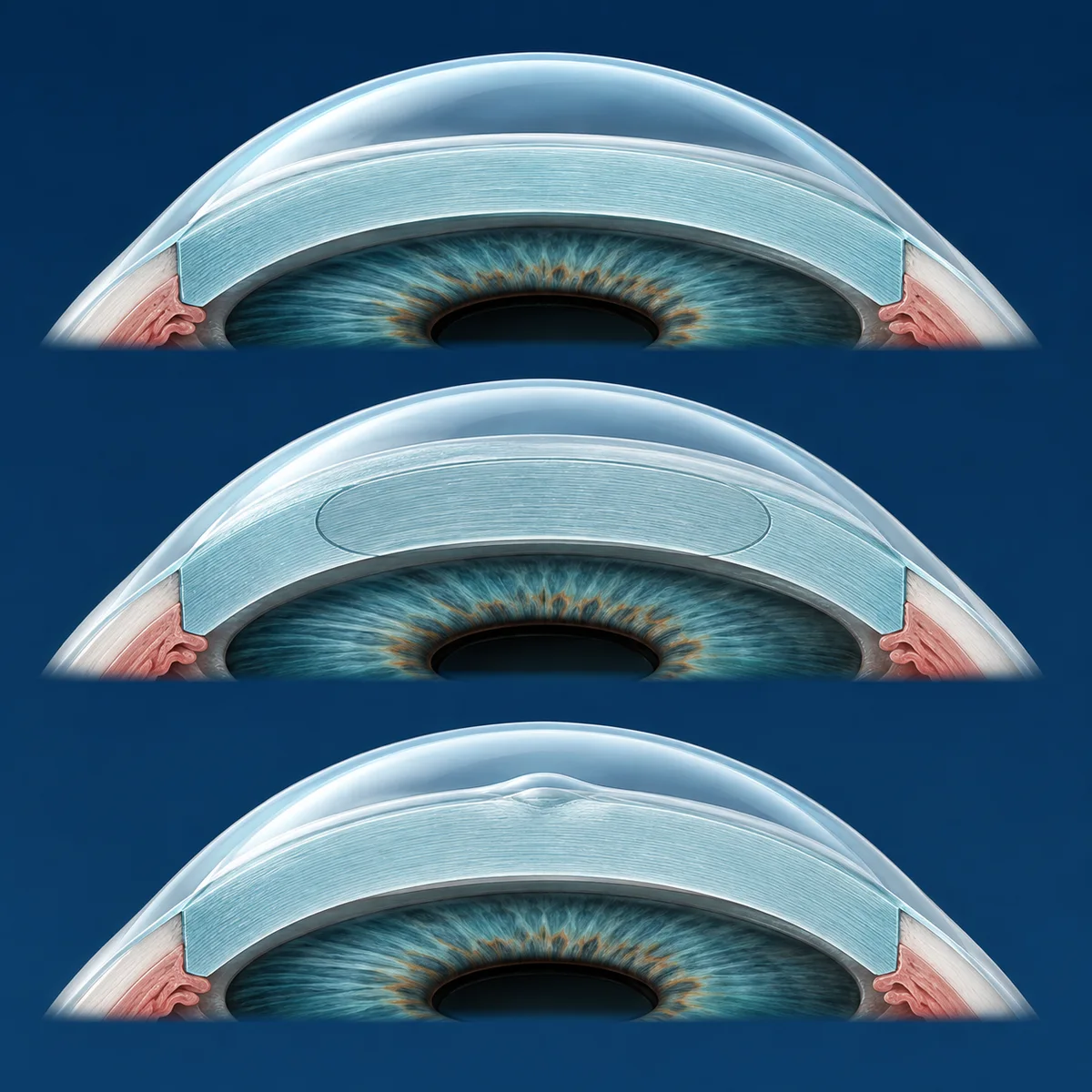
Some eyes remain optically irregular after LASIK or another procedure. Scleral fitting can be considered after the eye is medically stable.
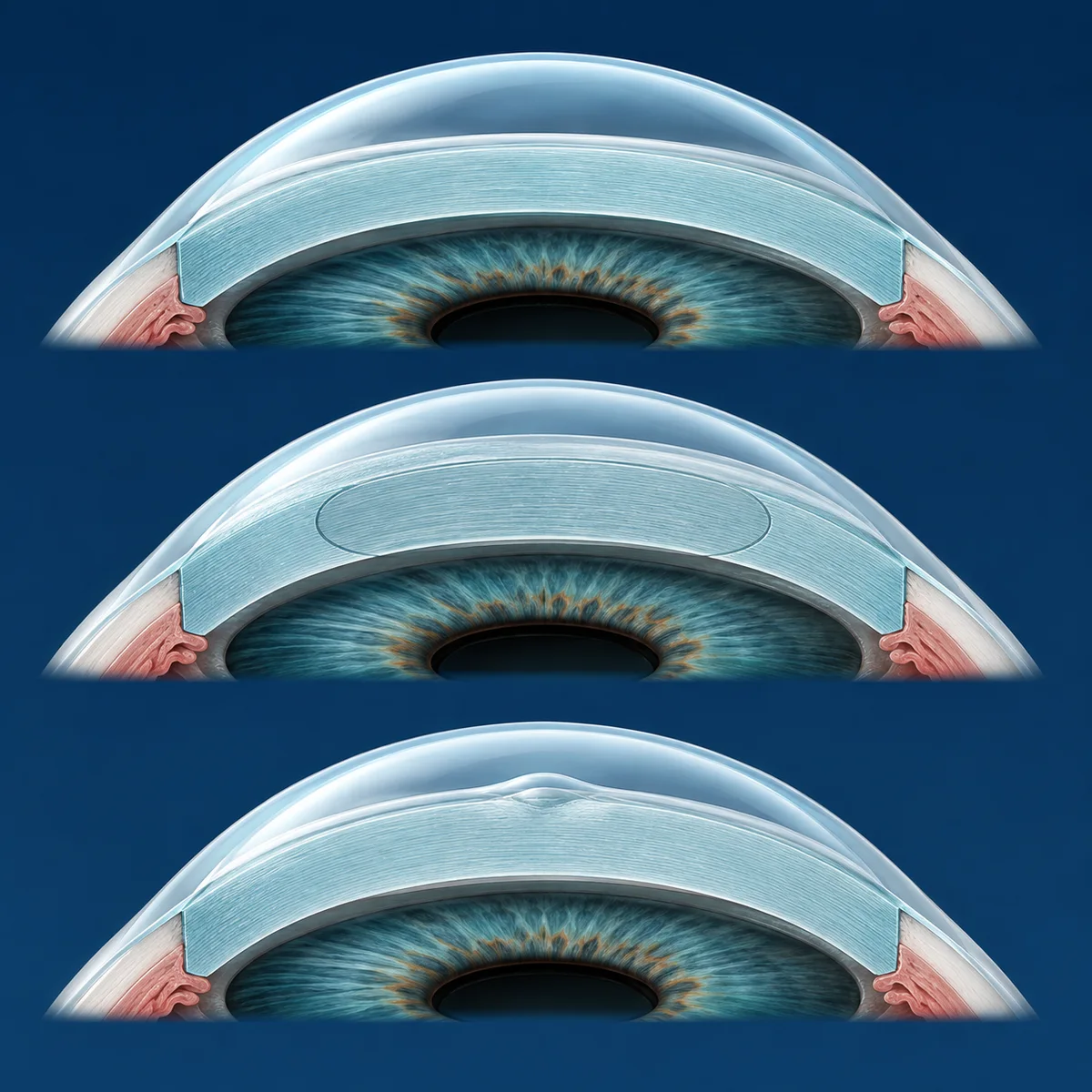
A transplanted cornea may have an irregular shape. Fitting requires close coordination with the treating ophthalmologist and careful monitoring.

For selected patients, the fluid reservoir beneath a scleral lens can protect and hydrate the corneal surface during wear as part of a wider care plan.
Medical treatment of the underlying disease remains the role of your treating ophthalmologist. LensWise focuses on contact-lens assessment, visual rehabilitation and coordinated follow-up.

WHO MAY BE SUITABLE?
A scleral lens assessment may help when glasses, soft lenses or small rigid lenses do not provide enough clarity, stability or comfort.
Active infection, significant inflammation or another unstable eye condition may need medical treatment before a lens can be fitted.
POSSIBLE BENEFITS
Benefits depend on the condition, lens design, eye health and how consistently the care routine is followed.

The rigid lens holds its shape over an irregular cornea. This can reduce distorted blur that glasses may not fully correct.
WHAT TO EXPECT FROM TREATMENT
Complex corneas may need several measurements, diagnostic trials and refinements before the fit is finalised.
We begin with your symptoms, visual needs, earlier treatment, current glasses or lenses and any reports from your ophthalmologist.
Detailed corneal maps, eye-surface assessment and lens measurements help us understand the shape that the lens needs to vault.
A trial lens is filled with preservative-free saline and placed on the eye. We assess clearance, alignment, comfort and vision after it settles.
The lens may need adjustments to its curves, landing area, power or other features. Complex eyes often need more than one fitting visit.
You receive hands-on guidance for insertion, removal, filling, cleaning, storage and the warning signs that mean the lens should be removed.
Follow-up checks assess vision, comfort, corneal response and lens condition. Your wearing time and replacement schedule are reviewed individually.
WHY CHOOSE LENSWISE?
Scleral lens care involves more than choosing a lens power. LensWise brings the assessment, trial fitting, handling support and follow-up into one understandable care journey.
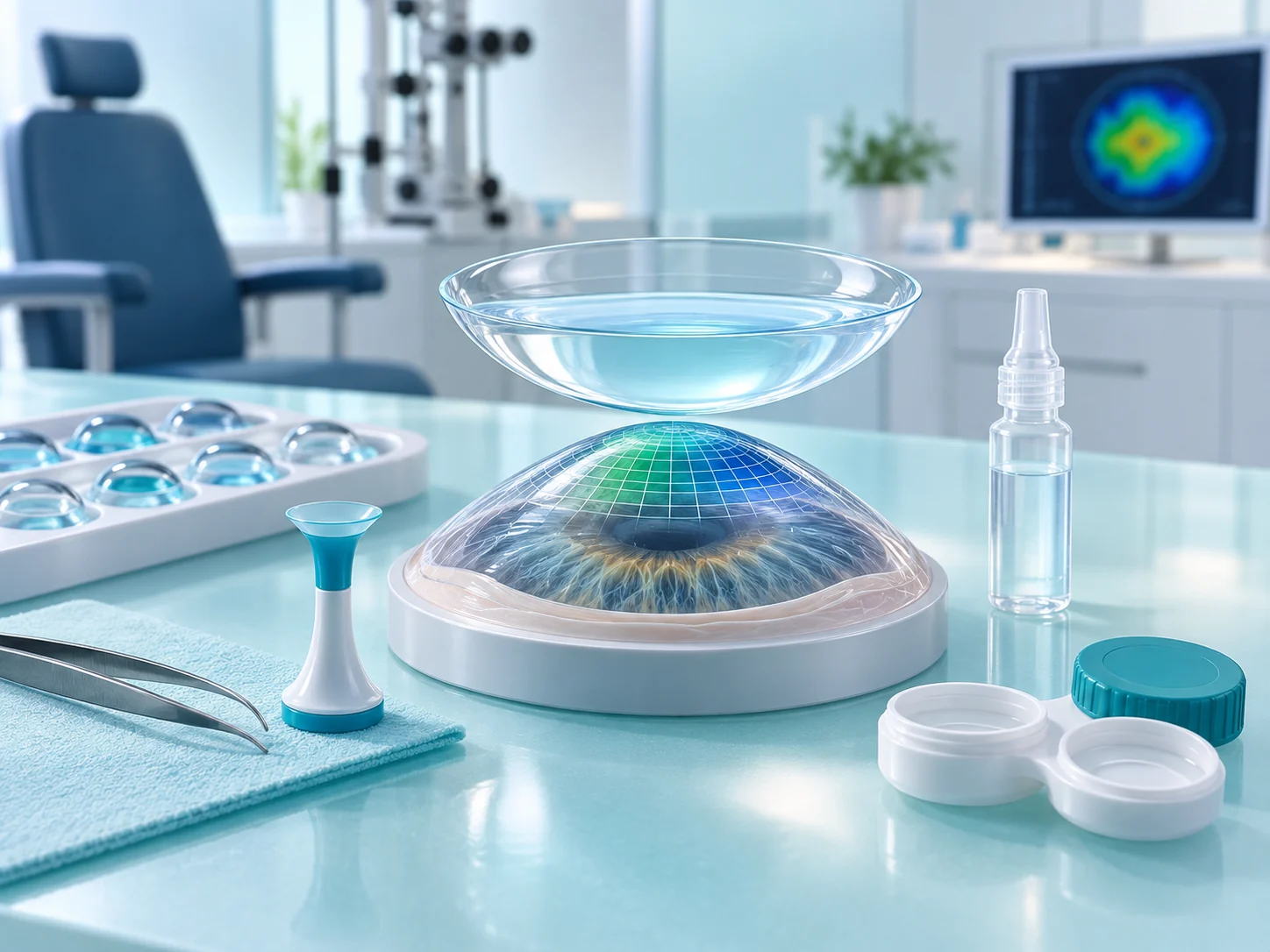
Corneal shape, eye-surface health, vision and everyday needs are considered before a lens is recommended.
Trial lenses and measured observations help refine clearance, alignment, comfort and visual performance.
Receive clear guidance for filling, inserting, removing, cleaning and storing your lenses safely.
Follow-up checks review vision, comfort, lens condition and eye health as your needs change.
QUESTIONS BEFORE YOUR FIRST FIT
These answers are general. Your examination and lens assessment determine what is appropriate for your eyes.
No. Scleral lenses can improve vision by creating a smooth optical surface, but they do not strengthen the cornea or stop keratoconus from progressing. Your ophthalmologist should continue monitoring the condition.
Many suitable wearers find them comfortable because the lens vaults the sensitive cornea and rests on the sclera. Comfort still depends on the fit, eye surface, wearing time and care routine.
There is no single schedule for everyone. Your practitioner will recommend wearing time based on eye health, lens fit, comfort and how the fluid beneath the lens behaves.
Tears or tiny particles can sometimes collect beneath the lens, often called midday fogging. Fit changes or removing, cleaning and refilling the lens may help; persistent clouding needs review.
Scleral lenses are normally prescribed for daily wear. Do not sleep in them unless specifically instructed, and keep lenses away from tap water, showers, pools and hot tubs.
It can feel unfamiliar at first. Guided practice, the right technique and suitable tools help most wearers build confidence. Training is part of the fitting process.
SCLERAL LENS CONSULTATIONS IN KOLKATA
Begin with a detailed assessment, realistic expectations and a clear plan for fitting, training and follow-up.
220, Madurdaha, Hussainpur, Kolkata, West Bengal 700107, India · Monday to Saturday · 9:00 AM–5:00 PM